
Compress images online, free, and keep the detail
Drop JPG, PNG, WebP, GIF, TIFF or HEIC files up to 16 MB each, or 32 MB with a free account. Iminify measures every image and picks the smallest file that still looks like the one you uploaded. No account, no watermark.
Before and after
See it on real images before you upload yours
These 10 images went through the exact pipeline your upload goes through, with every level and every format, and nothing was tuned by hand. Drag the handle, put the two side by side, or switch to Difference and see every pixel that moved, with the PSNR. Then change the level and the format and read the numbers off the results.
Best result so far: 97.2% smaller, Ultra level, AVIF.
All 10 samples at Smart, same format: 3.89 MB in, 1.45 MB out, 62.7% smaller overall.
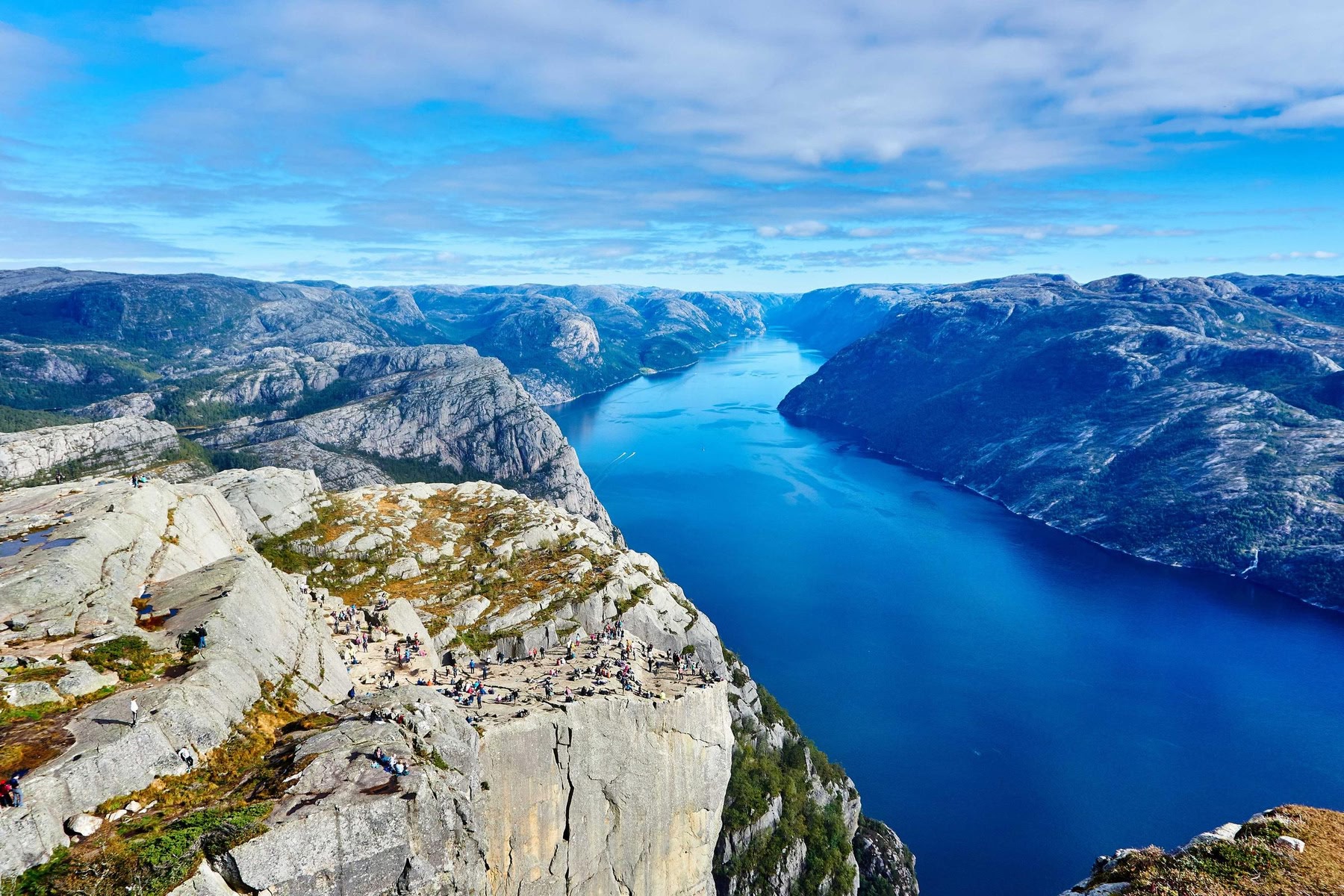
Fjord, from a camera
Rock, water and sky at 1800 by 1200, saved the way a camera saves it: quality 92, full chroma. Fine texture everywhere, which is where lossy encoders spend their bytes.
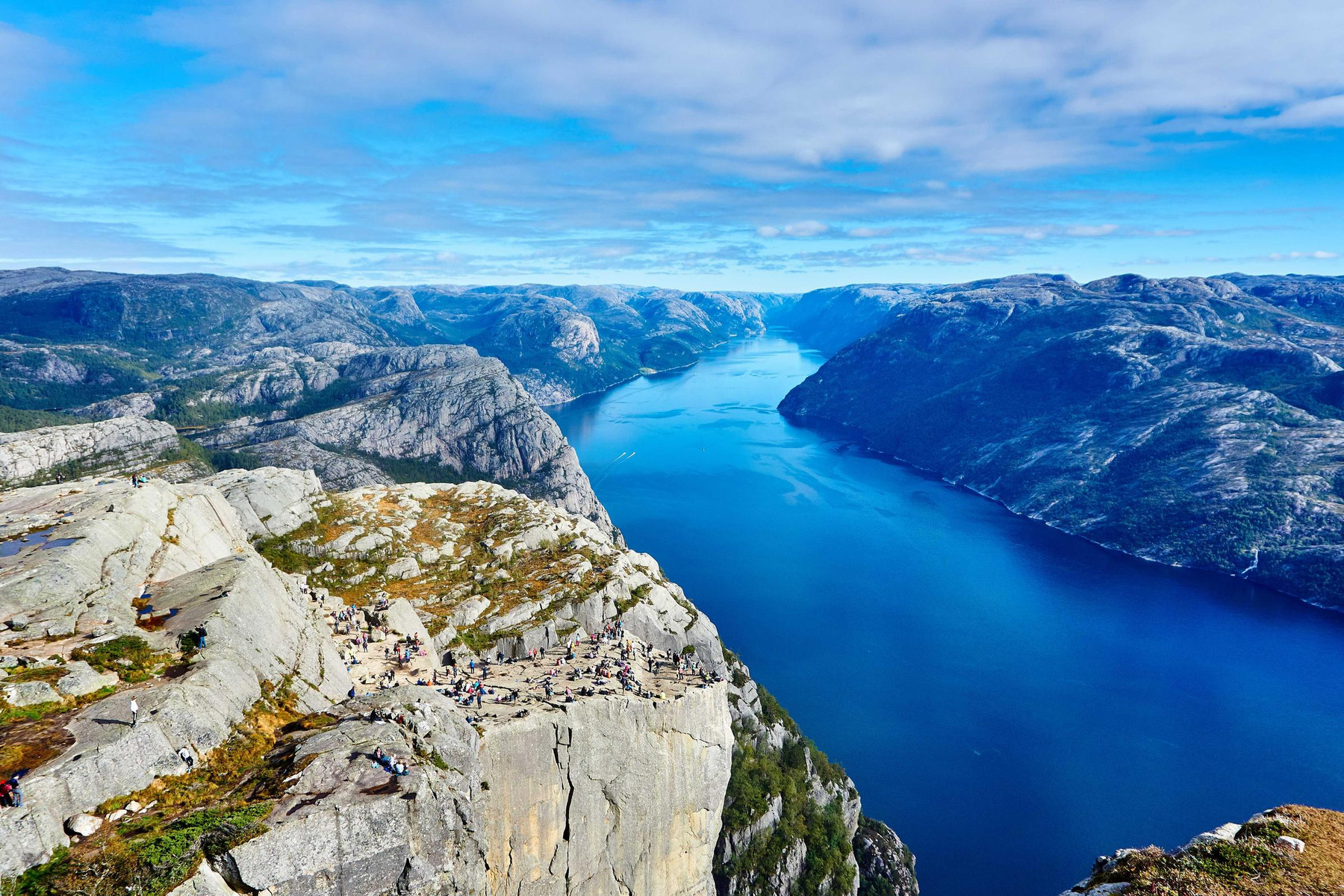
Original
Optimized
Brighter means a bigger change. Over 40 dB is hard to tell apart by eye; under 30 dB shows at a glance.
Look the same? Good, that's the job. And no, we didn't put the same picture on both sides: the only difference you're supposed to see is the file size.
The map and its numbers are computed in your browser from the two files on screen, the way the compare view on a result of your own does it. Smart aims at 40 dB and Ultra at 34 when it writes a JPG, WebP or AVIF, then holds the result to a perceptual score as well (70 for Smart and 50 for Ultra on the SSIMULACRA 2 scale, which the map can't show), and a result under its PSNR target stopped at the level's quality ceiling rather than grow the file; a PNG is quantised to fewer colours instead, with no target. Lossless comes out identical except where a file has to be re-encoded, a JPEG converted to another format or a lossy WebP, and there it gets the level's top quality.
Every result for this image
| Same format | WebP | AVIF | |
|---|---|---|---|
| Lossless | |||
| Smart | |||
| Ultra |
What Iminify does
One upload, four jobs, one download
Most image tools do one thing and make you chain three sites together for the rest. Iminify compresses, converts, resizes and strips or keeps metadata in a single pass, so your image is re-encoded once and only once. Two encodes in a row cost you quality twice. One doesn't.
Compress, with the quality chosen per image
A fixed quality setting treats a foggy sky and a brick wall the same, and they aren't. Smart mode encodes each image at several qualities, measures how far each one drifted from your upload, and keeps the smallest that still clears a 40 dB PSNR target. It then scores that result a second way, on the SSIMULACRA 2 scale, which is built to match what people see, because a mostly flat picture can clear an average-of-every-pixel target while the little detail it has looks rough; a result under 70 there sends the search back up. Ultra does the same with a 34 dB target and a bar of 50. An image that cannot reach the targets within the level's quality ceiling is encoded at the ceiling, and so is anything over 36 megapixels, where a search would outrun the time a job gets. The perceptual check runs on images up to 8 megapixels. Lossless never touches a pixel of a JPEG, PNG or GIF, apart from converting a wide-gamut PNG to sRGB.
Convert to WebP, AVIF, PNG or JPG
Pick a format, or pick Auto and let the encoders compete. Up to about eight megapixels, Auto writes every format your image can be saved in without losing transparency or animation and hands you whichever came out smallest; above that it goes straight to WebP, the format that wins most often. You never pay for a conversion that made the file bigger.
Resize by pixels or by percent
Set a width, a height, or both, or scale the whole image down to a percentage. Resizing uses a Lanczos filter and writes a lossless intermediate, so the format encoder is still the only step that loses anything.
Or compress a whole page at once
Paste a URL and the page scanner finds every image the page loads, runs each one through this same compressor with your settings, and gives you one zip. Built for the moment you inherit a site full of 4 MB hero images. It comes with a free account.
Scan a page insteadMetadata is stripped by default, camera model and GPS location included. Flip Keep EXIF on and it rides along, even into AVIF, where most tools quietly drop it. Stripping never leaves a phone photo on its side: the orientation tag is applied to the pixels before it goes, and a Display P3 or CMYK colour profile is converted to sRGB instead of just dropped, so the colours stay put.
Compression levels
What each level actually promises
Other compressors give you a slider from 1 to 100 and leave you guessing. Iminify's levels are defined by measurements, not a number: how far the compressed pixels are allowed to drift from yours, in decibels of peak signal-to-noise ratio, and how different the result is allowed to look on the SSIMULACRA 2 scale, a score built to match what people see. Higher is closer to the original on both. Above roughly 40 dB the difference isn't visible at normal size, and above 70 on the second scale it's hard to fault without the original next to it.
| Level | What it promises | What happens | Pick it when |
|---|---|---|---|
| Not one pixel changes in a JPEG, PNG or GIF | The file is repacked, never re-encoded. JPEGs get an optimised Huffman table and progressive scan, PNGs a tighter deflate pass, GIFs a lossless gifsicle run. A lossy WebP has no repack step, so it is re-encoded at the highest quality the level allows. A sideways phone JPEG is rotated losslessly on the way through and keeps its colour profile. The one exception to the promise is a PNG or WebP tagged with a wide-gamut profile such as Display P3: its colours are converted to sRGB, so the values change but the picture doesn't. | Logos, line art, anything you'll edit again, or when the file is evidence. | |
| No visible change, targets 40 dB PSNR and a perceptual score of 70 | A quality search runs per image and stops at the lowest quality that still clears the PSNR target. That answer is then scored on the SSIMULACRA 2 scale, because an average over every pixel lets a mostly flat picture through at a quality its detail doesn't deserve, and when it falls under 70 the search moves back up until it doesn't. Photos and graphics end up at different qualities because they need different ones; an image that cannot reach the targets inside the quality ceiling is encoded at the ceiling. | Almost everything on a website. This is the default for a reason. | |
| Smallest file, targets 34 dB PSNR and a perceptual score of 50 | The same two-stage search with lower targets. Fine texture softens a little; edges and text stay sharp. | Thumbnails, backgrounds, email images, anything shown small or blurred anyway. | |
| No compression at all | Only the resize, conversion or metadata setting you chose is applied. An untouched upload comes back byte for byte. | You only wanted to resize or convert, and quality is someone else's decision. |
Formats
Which format should you pick?
You can upload PNG, JPG, JPEG, WEBP, GIF, HEIC, HEIF, TIFF, TIF. You can get back WebP, AVIF, PNG or JPG. Here's when each one is the right answer, and when to let Auto decide.
| Format | Best for | Transparency | Animation | Worth knowing |
|---|---|---|---|---|
| WebP | The default for the web. Photos, graphics, screenshots. | Yes | Yes | Supported by every current browser. Iminify encodes it with cwebp at its slowest, most thorough setting, and losslessly for PNG sources when you ask for Lossless. |
| AVIF | Photos and graphics for current browsers. The smallest file on nine of the ten samples above. | Yes | No | The newest format and the slowest to encode. Smart and Ultra search each image for the lowest AVIF quality that still clears the level's PSNR floor, the same floor every other format is held to, and at that floor AVIF beat WebP and JPG on every photograph and graphic above. Only the desktop screenshot went to PNG. Lossless is where it struggles: AVIF's lossless mode came out bigger than WebP's on nine of ten. Supported in Chrome, Firefox, Edge and Safari 16.4 or newer. |
| JPG | Photos that have to open anywhere, including old software. | No | No | Encoded with jpegli, the JPEG encoder from the JPEG XL project: adaptive quantisation and a psychovisual model inside a standard JPEG that opens anywhere. On thirteen test photographs it came in 4.7% under mozjpeg at Smart with better perceptual scores, in a third of the time. Lossless repacks use mozjpeg's jpegtran. Progressive by default. |
| PNG | Logos, icons, UI, anything with hard edges or transparency that must open everywhere. | Yes | No | Smart and Ultra quantise to a palette of at most 256 colours with pngquant, which is where the big PNG savings come from. Small and mid-sized PNGs then get a zopfli deflate pass at every level, which packed the lossless test files 3 to 16 points tighter than optipng; very large ones get optipng instead, because zopfli is priced per pixel. Lossless keeps every colour. |
| GIF | Short animations where WebP isn't an option. | Yes | Yes | Every frame is kept. Convert an animated GIF to WebP and the animation survives too; convert it to PNG, JPG or AVIF and only the first frame does. |
| HEIC | Uploading iPhone photos. Output as JPG, WebP or AVIF. | No | No | Input only. Browsers don't display HEIC, so the useful move is HEIC in, WebP or JPG out. |
Popular conversions
How it works
Three steps, no sign-up
-
1
Pick a level and, if you like, a format or size
Smart is selected for you. Turn on Change Format to convert, Resize to scale, Keep EXIF to preserve metadata.
-
2
Drop your images
A whole batch at once, up to 16 MB each as a guest and 32 MB with a free account. Each one is queued the moment it lands and starts compressing on our servers.
-
3
Download one file or all of them
Every result shows the original size, the new size and the saving. Compare any of them with its original, rename what needs a new name, then tick the ones you want and download a single zip.
After the result
Check it, tune it, name it, pass it on
A result is a row in a table with a menu at the end of it, and the menu is where most tools stop and hand you a download button. Every item in it works on the original we already have, so nothing is uploaded twice, and none of it needs an account.
Compare it with the original, three ways
Compare puts the two on the drag-to-compare stage from the showcase above, side by side, or on a difference map: every pixel coloured by how far it moved, with the share that changed noticeably and the PSNR in decibels. That is the measurement the levels promise, computed in your browser from the two files, so a Smart result can be checked against its 40 dB target before you trust it.
Compress it again with other settings
Not small enough, or a touch too soft? Change the level, the format or the size on the page and pick Recompress. The new result is encoded from the original you uploaded, never from the optimized copy, so a second pass does not stack a second generation of loss on the first. Both results stay in the table until you delete one, and a re-run counts as one of your daily images.
Rename it before you download
Give a result the name it will have on your site, or select a batch and number them in one go. The single download, the zip and the preview all use the new name, and the extension follows the format you chose.
Share it on a page of its own
Share gives a result a public page: the optimized copy, the original, the three compare views and both downloads, plus a button that lets whoever opens it run the same original through their own settings. The link is 24 random characters nobody can guess, nothing lists it, search engines are asked to stay out, and Stop sharing switches it off. Nothing is public until you press Share and agree.
Guest, account or Pro
Compress without an account, sign up for more, or go Pro and forget the caps
No trial and no card to start. A guest gets 20 images a day and a history that lives in this browser. A free account raises that to 50, opens the page scanner and keeps your history with your account for as long as you have one. Pro takes the daily caps away, raises the size limit to 90 MB and puts your uploads ahead of the queue, from $3 a month.
| What you get |
Guest
Drop a file, get it back. Nothing to fill in. |
Free account
One form and one email to verify, and the limits move. |
Pro
$3 a month billed $36 a year, 40% less than monthly $5 a month billed month to month, cancelled any time For the days when 50 images are not enough. |
|---|---|---|---|
| Images a day | 20 | 50 | Unlimited |
| Page scans | Not included | 10 a day, up to 50 images each | Unlimited, up to 150 images each |
| Size per image | Up to 16 MB | Up to 32 MB | Up to 90 MB |
| Queue | The shared queue | The shared queue | A lane of its own, ahead of everyone waiting |
| Uploads a minute | 20 | 30 | 60 |
| Your history | In this browser, until the cookies go | Kept with your account for as long as you have one | Kept with your account for as long as you have one |
| Levels and formats | All of them | All of them | All of them |
| Smart level, quality measured per image | Included | Included | Included |
| Auto format, the smallest file wins | Included | Included | Included |
| Format conversions | Unlimited | Unlimited | Unlimited |
| Resize, convert, keep EXIF | Included | Included | Included |
| Batch upload, one zip | Included | Included | Included |
| Compare, recompress, rename and share | Included | Included | Included |
| API, MCP server and libraries | Not included | Soon, within your daily count | Soon, without a daily cap |
| Watermarks and ads | None, ever | None, ever | None, ever |
| Start without an account | Create a free account | Go Pro |
The daily counts reset 24 hours after your first image. Signing up takes a name, an email and a password, and the account stays free. Pro is paid by card, PayPal, Apple Pay or Google Pay, renews on its own and can be cancelled any time from your plan page. Payment methods and billing questions are on the pricing page.
Your images
Straight answers about where your files go
Uploads travel over an encrypted connection and are compressed on servers we run ourselves. Your image is never sent to a third-party API. The encoders are jpegli, mozjpeg's jpegtran, pngquant, zopfli, cwebp, avifenc and gifsicle, running on our own machines.
We keep your originals and your optimised copies rather than deleting them on a timer, so a result is still there when you come back for it.
A free account isn't required to compress. Sign up and your history stays with your account instead of this browser, for as long as you have one, so every result is still there on another device or after your cookies are gone, and the daily allowance goes from 20 images to 50.
Nothing you upload is public. A result gets a public page only when you press Share and agree, at an address of 24 random characters that nothing lists and that search engines are asked not to index, and Stop sharing takes it down again.
Questions
Questions people ask before they upload
Your first image takes about ten seconds
Scroll up, drop a file, watch the size fall. If it doesn't shrink, you'll get your original back and nothing lost.